Tuesday, 28 August 2012
My Independent Research Data
Whilst I'm here, I figured why not also post my Independent Research data, seeing as how one of the main aspects I will be analysing is dramaturgy and how front stage and back stage persona's differ. So here it is......
Please note that the first like 5 mins is just blank screen, I just don't know how to cut videos.

Dramaturgy
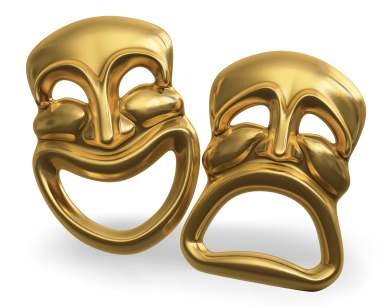
This week’s topic was Dramaturgy and a lot to do with
Goffman’s comparison of life as a drama. Goffman saw social life as almost like
an act or a game. A domain where you play by the rules, like having a job or
paying taxes. If you successfully perform these aspects of life, you
metaphorically ‘move up a level’. With the idea of social life being like a
drama, one of the things Goffman is implying is that in any kind of interaction
you have, one of your main goals is always to make a good impression. What I
found interesting is the etymology of the word person that Andy told us in the
lecture. ‘Person’ comes from the word mask, which is indicative of the fact
that we all have dramatist persona’s, that we act how we want people to see us
and according to our roles, especially in a front stage setting.
The front stage/back stage concept is also one of the things
that I found particularly interesting. The fact that most people can change
their persona’s completely by just walking through a door (whether it be a
physical or metaphorical door). The example Andy used in the lecture was where
the waiter when speaking to the diners says things like “Would you like a glass
of wine” or “I recommend the chef’s special, it is really good”. They will
speak like this to the diners whether they like the people or not, because this
is their front stage. However, if they do not like the people they are waiting
on they are likely to walk into the kitchen and say something along the lines
of “Table 3 are horrible people, I feel like spitting in their food”. They are
comfortable to say this in their backstage arena because it helps them maintain
face.
Goffman,
Erving. 1971. “Performances.” Pp. 28-82 in The Presentation of Self in
Everyday Life. Harmondsworth: Penguin.
I also made a comment this week. Here's the link: http://nikhailmaestassoc250.blogspot.com.au/2012/08/blog-2-soc-250.html?showComment=1346201605441#c2806005335953943827
I also made a comment this week. Here's the link: http://nikhailmaestassoc250.blogspot.com.au/2012/08/blog-2-soc-250.html?showComment=1346201605441#c2806005335953943827
Tuesday, 21 August 2012
ME, ME, ME- Presentation of Self
This week’s topic is all about the presentation of the self.
In particular Erving Goffman’s Nature of Defence and Demeanour (1967). Basically,
in both the reading and the lecture the self is described as something that is
completely socially constructed and managed through social processes. Although
the reading, I believe, explains a rather simple concept in unnecessary detail,
what I found particularly interesting was the importance placed on maintaining or
saving ‘face’, especially Goffman’s reference to one’s obligations, that in
order to uphold their image, people have to sometimes do things they really do
not want to do. What I find interesting is that more often than not, people
will fulfil these obligations, not because they have to, but because they do
not want to tarnish their image. For example, I myself have gone to a party I
really don’t want to go to just to ensure everyone does not think I’m like an
old Grandma
.
Some of the stuff Andy mentioned in the lecture also struck
me. I always knew that embarrassment was a horrible thing for almost everybody,
but never realised that it is actually an aspect of oneself that sociologists
actually pay attention to. When you think about being embarrassed more deeply
and realise that it is a complete loss of dignity, it becomes more obvious that
humiliation actually tarnishes the sacredness of the human self. The fact that
we (well, me personally anyway) spend time thinking about avoiding those
awkward moments in social situations indicates the importance of avoiding
social shame in order to maintain our selfhood. This topic has sort of made me
realise that every time I have worried about falling over and making a fool of
myself, it is completely warranted, so thanks Goffman :)
Now in my attempt to make my blog look pretty, I give you a
visual representation of someone losing face and being profusely laughed at. He
fell…on slime…on a game show….on T.V. Please note, the one laughing is also my
future husband.


Goffman,
Erving. 1967. “The Nature of Deference and Demeanor.” Pp. 47-96 in Interaction
Ritual: Essays on Face-to-Face Behaviour. New York: Pantheon Books.

Subscribe to:
Posts (Atom)